English
  日本語
日本語  Deutsch
  Español




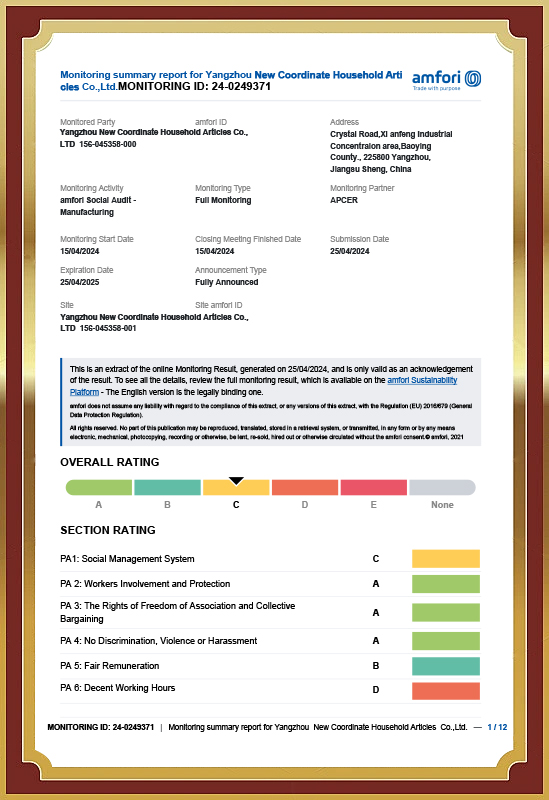
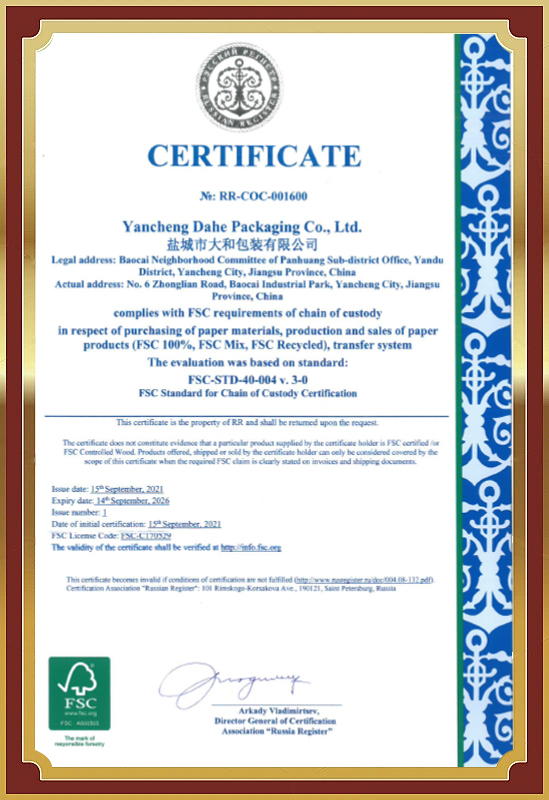

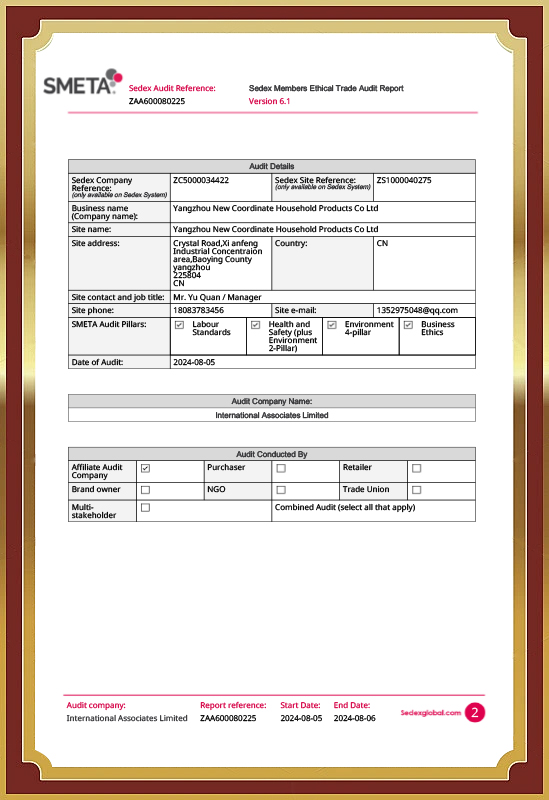

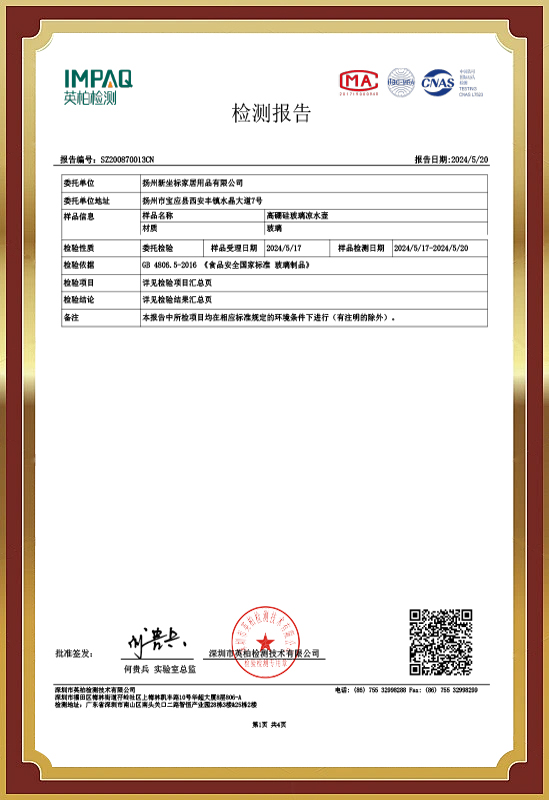
As a China OEM Glass Bottles Suppliers and ODM Cheap Glass Bottles Factory. Yangzhou New Coordinate Household Articles Co., Ltd, focusing on kitchen cooking utensils, storage bottles and jars kitchen storage utensils series products. Products include: sealing jars, seasoning bottles, cooler jugs, cups, bottles and other products.
The organization and management of our company are based on the modern enterprise management system. By improving the internal infrastructure, and constantly strengthen the quality management, standardization management, measurement management, statistical management, adhering to the scientific management as a prerequisite, technological progress as the basis, we continue to improve product quality and enhance competitiveness. We apply ourselves to provide our customers with the best quality and after-sales service, trying to create a bright future with our clients.
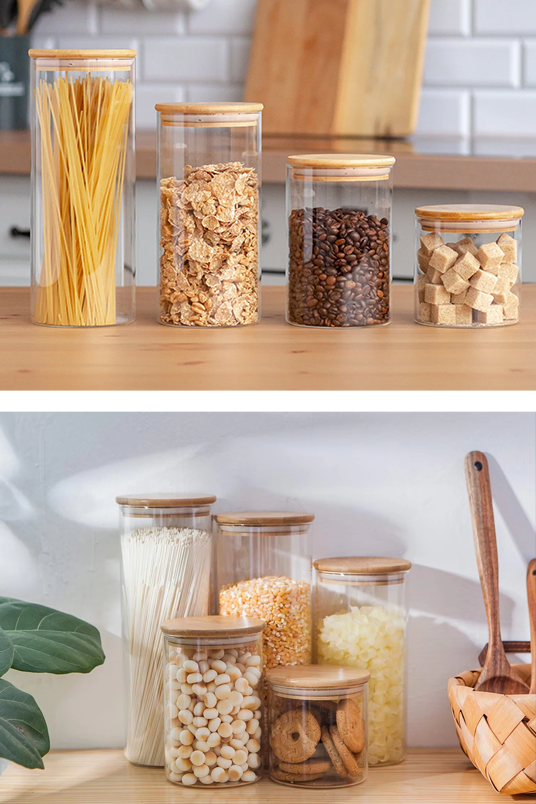
Honor of New Coordinate
Pursuing performance excellence and building a modern management team for the future
Last News
At the intersection of modern home aesthetics and sustainable living, glass bottles have long transcended their simple function of holding items. Yangzhou New Coordinate Household Articles Co., Ltd., as a pioneer in the home furnishings industry, consistently combines rigorous scientific management with the natural properties of glass. By delving into the in-depth knowledge of glass bottles, we can more clearly understand the core value of this ancient material in contemporary life.
Core Advantages and Characteristics of Glass Bottles
As a silicate-based non-metallic material, glass stands out among many packaging materials due to its physical and chemical stability.
Extremely High Chemical Inertness: Glass has extremely strong corrosion resistance. Except for a very few substances such as hydrofluoric acid, it almost never reacts chemically with its contents. This ensures the original flavor of the liquid or solid inside the container, eliminating the risk of bisphenol A (BPA) or microplastic migration associated with plastic materials.
Excellent Barrier Properties: The dense molecular structure of glass effectively blocks the penetration of oxygen, moisture, and carbon dioxide. For easily oxidized condiments, high-end skincare products, or essential oils, glass bottles provide a near-perfect "vacuum" protective environment.
Diverse Optical Properties: Glass can achieve varying degrees of light-blocking effects by adding metal oxides (such as cobalt, manganese, and iron). Dark brown, dark green, or cobalt blue glass bottles effectively filter ultraviolet rays, protecting the molecular structure of photosensitive substances from damage.
Environmentally Friendly and Infinitely Recyclable: Glass is one of the few materials that can be 100% recycled and reused indefinitely. Yangzhou New Coordinate consistently emphasizes this circular economy concept in product development, reducing its carbon footprint.
Classification and Application Logic of Glass Materials
Depending on the composition ratio and processing technology, glass bottles are endowed with different physical properties to adapt to diverse home environments.
| Glass Type | Key Chemical Components | Physical Properties | Typical Application Scenarios |
| Soda-Lime Glass | Primarily SiO2, Na2O, and CaO | High transparency; easy to mold at scale; cost-effective. | Everyday beverage bottles, food storage jars, mass-market packaging. |
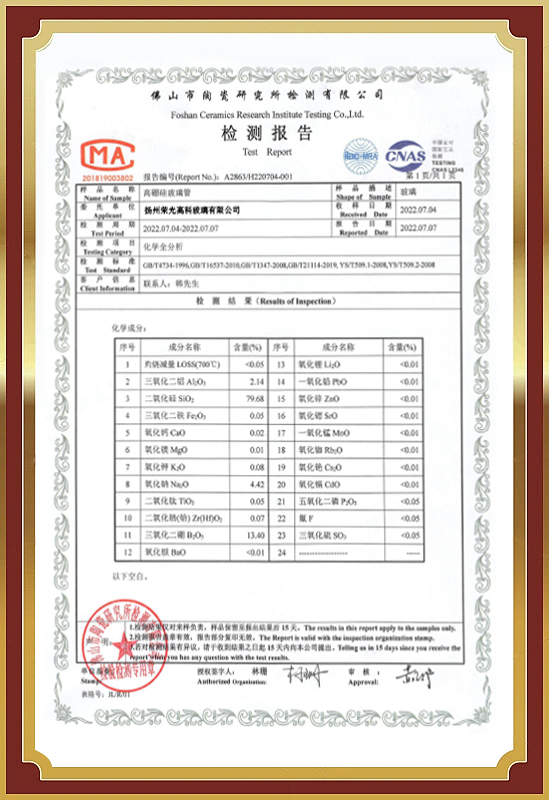
| Borosilicate Glass | High concentration of Boron Trioxide (B2O3) | Extremely low thermal expansion coefficient; superior thermal shock resistance. | Heat-resistant teapots, oven-safe bakeware, laboratory-grade glassware. |
| Lead Crystal Glass | Infused with varying percentages of Lead Oxide (PbO) | Exceptionally high refractive index; brilliant diamond-like luster; heavy hand-feel. | High-end home decor, premium cut-crystal stemware, luxury decanters. |
| Tempered Glass | Subjected to thermal or chemical strengthening | Enhanced impact resistance; breaks into small, blunt-edged fragments for safety. | High-safety outdoor water bottles, large-scale kitchen containers, heavy-duty drinkware. |
The Sensory Aesthetics and Processing Technology of Glass Bottles
Yangzhou New Coordinate Household Articles Co., Ltd. believes that the value of glass bottles lies not only in their function but also in the visual tension they exhibit through different processes.
Blowing: Whether machine-blown or traditionally hand-blown, glass bottles possess a unique streamlined silhouette. This process creates containers with uniform thickness and smooth inner walls.
Frosting & Etching: Acid washing or sandblasting treatments create a translucent, hazy texture on the glass surface. This not only enhances slip resistance but also gives the product a sophisticated "tactile memory."
Coating: While maintaining the transparency of the glass, spraying or electroplating techniques can achieve rich visual effects such as gradients, metallic colors, or matte finishes.
Silkscreen & Embossing: Intricate textures are directly formed or printed onto the bottle surface. Embossing increases hand grip and gives the container a sculptural artistic feel.
Yangzhou New Coordinate' Pursuit of Quality
In the selection and design of glass bottles, we not only focus on the exquisite appearance but also emphasize the implicit support of technical specifications.
Wall Thickness Uniformity: Through precise thermal control, we ensure uniform stress throughout the bottle, avoiding the risk of cracking due to excessive thinness in certain areas.
Internal Stress Relief: Scientific tempering and annealing processes completely eliminate the internal tension generated during the glass forming process, improving the container's durability.
Sealing System Synergy: A perfect glass bottle requires a precise sealing structure. Whether it's a screw cap, stopper cap, or latch design, it must achieve extremely high precision with the threaded connection at the bottle neck.
Frequently Asked Questions (FAQ)
Q: Why do some glass bottles crack when hot water is poured in?
A: This is usually because ordinary soda-lime glass has relatively slow thermal conductivity. When hot water is poured in, the inner wall expands rapidly while the outer wall remains unchanged, generating tensile stress that exceeds the glass's tolerance limit. For high-temperature resistance, we recommend choosing borosilicate glass containers with a lower coefficient of thermal expansion.
Q: Will microbubbles on the surface of glass bottles affect quality?
A: Tiny bubbles are a natural physical phenomenon during the glass melting process. However, Yangzhou New Coordinate uses advanced clarification technology to control visible bubbles to an extremely low level. While microbubbles generally do not affect structural strength, fewer bubbles and higher transparency often indicate a higher level of manufacturing process.
Q: How to effectively clean "fogging" on glass bottles caused by long-term storage?
A: "Fogging" is often due to scale buildup or slight alkalization of the glass surface. Soaking in a weak acidic solution (such as white vinegar or citric acid) can effectively neutralize and remove these residues, restoring the glass's clarity.
Q: Do glass bottles have a shelf life?
A: Glass itself is an extremely stable inert material, and under normal temperature and light-protected conditions, it has virtually no "shelf life." Its lifespan mainly depends on the degree of physical impact and whether it has experienced extreme temperature fluctuations.